

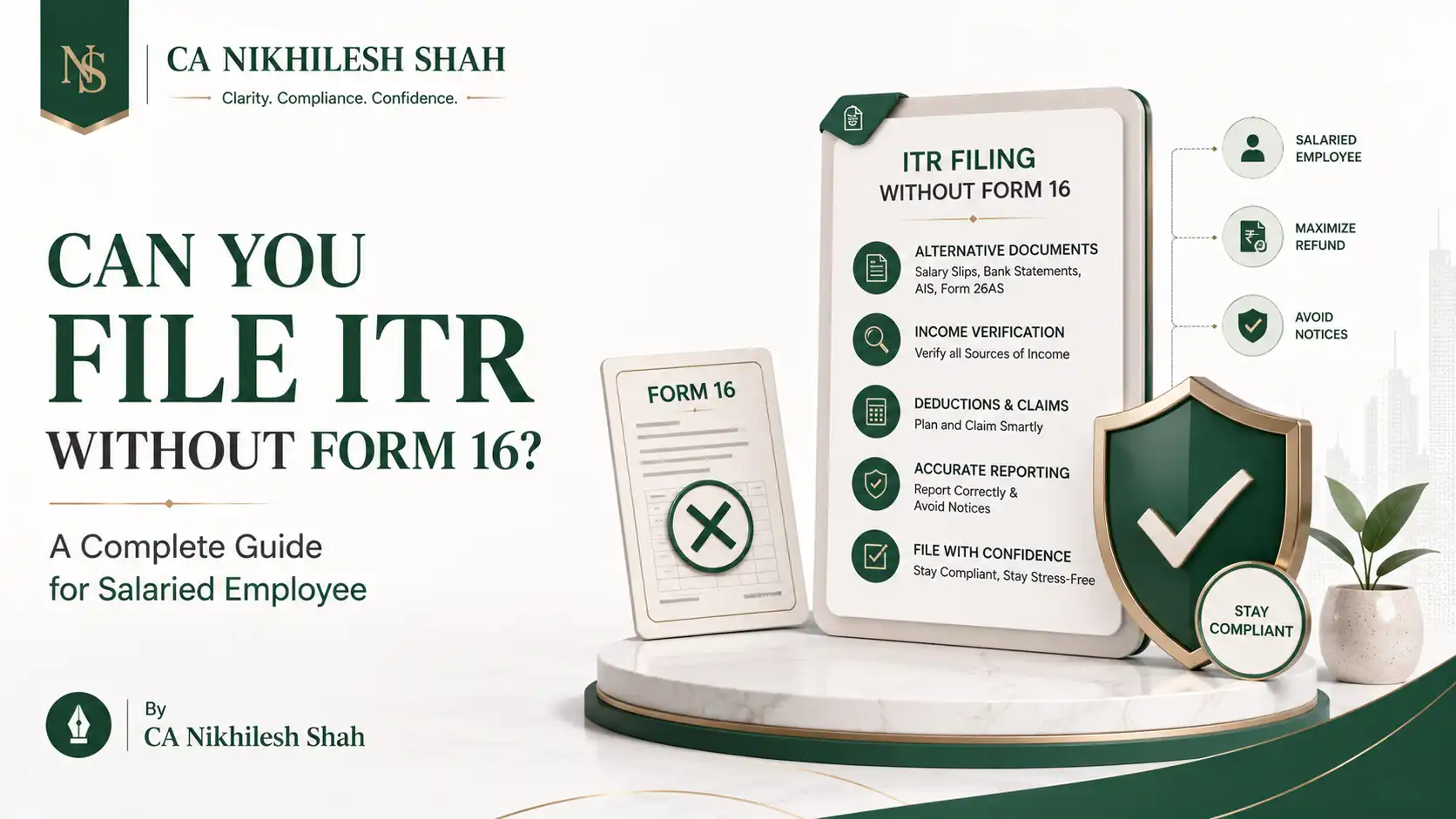
Every year, thousands of salaried employees delay filing their Income Tax Return simply because they have not received Form 16 from their employer. Some assume they cannot file their return without it, while others worry that missing the document could lead to notices or incorrect tax reporting.
The good news is that Form 16 is helpful, but it is not legally mandatory for filing your Income Tax Return. What matters is reporting your income accurately and paying the correct amount of tax.
Whether you recently changed jobs, your employer has delayed issuing Form 16, or your previous company has closed down, you can still file your return confidently by using the right documents. Understanding this process can help you avoid penalties, interest, and unnecessary stress while ensuring complete compliance with the Income Tax Act.
What Is Form 16?
Form 16 is a certificate issued by an employer to an employee showing the salary paid and the Tax Deducted at Source during the financial year.
It generally contains details of gross salary, exempt allowances, deductions claimed, taxable salary, TDS deposited, and employer information.
Although Form 16 simplifies return preparation, it is only a summary document. The Income Tax Department does not make it compulsory for filing your Income Tax Return.
Can You Legally File ITR Without Form 16?
Yes.
A salaried employee can legally file an Income Tax Return without Form 16 provided the income reported is accurate and complete.
The Income Tax Department primarily verifies your return using information available through employer TDS filings, Annual Information Statement, Form 26AS, salary credits reflected in your bank account, and other financial reporting.
Therefore, the absence of Form 16 does not prevent you from filing your return.
Documents Required Instead of Form 16
If Form 16 is unavailable, collect the following documents before preparing your return.
Salary Slips
Monthly salary slips provide details of basic salary, allowances, deductions, provident fund contributions, professional tax, and monthly TDS.
Bank Statements
Salary credits appearing in your bank account help verify annual salary received and identify any additional payments such as bonuses or incentives.
Annual Information Statement
AIS provides a comprehensive summary of salary income, interest income, securities transactions, taxes paid, and other financial information reported to the Income Tax Department.
Form 26AS
Form 26AS confirms TDS deducted by your employer and verifies whether the deducted tax has actually been deposited with the government.
Investment Proofs
Collect documents relating to life insurance premiums, Public Provident Fund, ELSS investments, National Pension System contributions, health insurance premiums, and home loan interest certificates.
These records help you correctly claim eligible deductions.
Step-by-Step Process to File ITR Without Form 16
Filing your return without Form 16 requires careful reconciliation of income and tax details.
First, calculate your total salary using all monthly salary slips.
Next, verify that every salary payment matches your bank statement.
Then compare the TDS deducted every month with the entries available in Form 26AS.
Review your AIS carefully to identify interest income, dividends, capital gains, or other income that may not appear in salary records.
Add income from savings accounts, fixed deposits, rental property, freelancing, or investments wherever applicable.
Claim eligible deductions and exemptions based on supporting documents.
Finally, calculate your tax liability under the applicable tax regime and file the return before the due date.
Common Situations Where Form 16 May Not Be Available
Many genuine situations prevent employees from receiving Form 16.
You may have switched employers during the financial year.
Your employer may have delayed issuing Form 16.
The employer may not have deducted TDS because your taxable income remained below the threshold.
A startup or small business may have administrative delays.
In rare situations, the employer may have ceased operations before issuing the certificate.
None of these situations prevent you from filing your Income Tax Return.
Important Tax Planning Opportunities
Even without Form 16, proper tax planning can significantly reduce your overall tax liability.
Choose the Right Tax Regime
Compare the old and new tax regimes before filing. Depending on your salary structure, deductions, and exemptions, one regime may provide greater tax savings.
Claim Eligible Deductions
Where applicable under the chosen regime, ensure deductions such as Section 80C investments, National Pension System contributions, health insurance premiums under Section 80D, and eligible home loan benefits are properly claimed.
Report All Income
Many taxpayers overlook interest from savings accounts, fixed deposits, or dividends. Reporting every source of income reduces future compliance risks.
Verify Employer TDS
Always ensure the tax deducted by your employer matches Form 26AS before filing your return.
Risk Factors to Avoid
Filing without Form 16 is perfectly acceptable, but certain mistakes can create unnecessary tax notices.
Using estimated salary figures instead of actual income.
Ignoring bonus payments or arrears.
Missing interest income reported in AIS.
Claiming deductions without supporting evidence.
Choosing the wrong tax regime.
Ignoring mismatches between Form 26AS and salary records.
Not reporting income from multiple employers.
A careful review before submission can prevent these issues.
Latest Income Tax Provisions Applicable in 2026
For Assessment Year 2026-27, taxpayers should carefully review the applicable tax regime before filing.
AIS and Form 26AS continue to play an important role in income verification, making accurate reporting essential.
Pre-filled return information has expanded significantly, but taxpayers remain responsible for verifying every figure before submission.
Incorrect reporting, omitted income, or unsupported deduction claims may result in notices, additional tax demands, interest, or penalties.
Maintaining proper documentation remains one of the most effective safeguards during assessments.
Compliance Checklist Before Filing
Before submitting your Income Tax Return, ensure you complete this checklist.
- Verify salary from salary slips.
- Match salary credits with your bank statement.
- Download and review AIS.
- Verify TDS in Form 26AS.
- Report all additional income.
- Claim only eligible deductions.
- Select the correct tax regime.
- Check PAN, Aadhaar, and bank account details.
- Review every figure before submission.
- Complete return verification within the prescribed timeline.
Why Professional Guidance Matters
Although online filing has become easier, tax calculations can become complicated when salary structures include multiple employers, stock options, foreign income, rental income, bonuses, or capital gains.
Professional review helps identify missed deductions, verify tax calculations, minimise compliance risks, and ensure complete reporting.
For business owners, senior professionals, NRIs, investors, and high-income individuals, strategic tax planning often extends well beyond simply filing an annual return.
Conclusion
Not having Form 16 should never stop you from filing your Income Tax Return on time.
With salary slips, bank statements, AIS, Form 26AS, and investment records, you can accurately calculate your taxable income and complete your return confidently.
The key is ensuring every source of income is disclosed correctly, eligible deductions are claimed with proper documentation, and tax calculations are thoroughly verified before filing.
When your financial affairs involve multiple income sources or complex tax positions, seeking professional advice can help you remain compliant while making informed tax decisions.